Try These 23 Wedding Invitation Ideas Before You Order Yours
23 wedding invitation ideas across letterpress, foil, acrylic, and modern minimal styles. Real costs, timeline rules, and what to do before you click order.
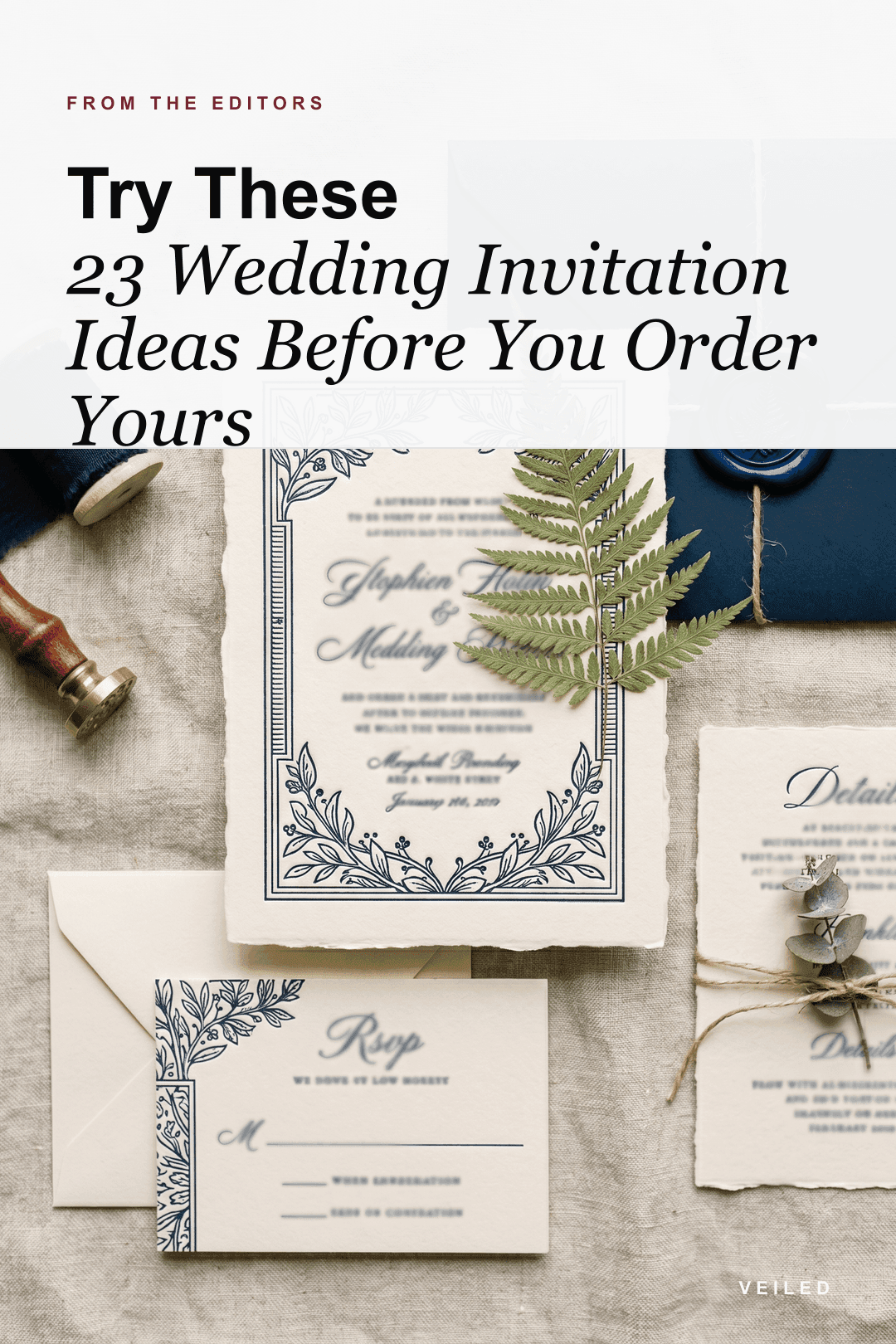
Wedding invitation ideas turn into a budget surprise around month four of planning, because the line item on most stationery quotes hides about $400 of services brides did not know they were buying. The 23 ideas below cover what each style actually costs, who they are right for, and what to ask the stationer before you sign the proof. Most invitations get reordered because of a small oversight on the proof, not because of a design change, and I want you to skip that step entirely.
The wedding invitation costs people don't see coming
A wedding invitation suite quote rarely matches what shows up on the credit card. The base price on Minted or Zola is for the invitation alone. Envelopes, RSVP cards, details cards, envelope printing, postage, and assembly are usually separate. A $4-per-invite base quote turns into $11 per invite by the time you hit checkout.
The other quiet cost is postage. Square envelopes, wax seals, and oversized suites all trigger a non-machinable surcharge from USPS, which adds about 50 cents per envelope. For a guest list of 150, that is $75 of postage you did not see coming. Ask your stationer to mock up a single complete suite at full weight and walk it into the post office before printing the full run.
Letterpress and foil-pressed wedding invitation ideas
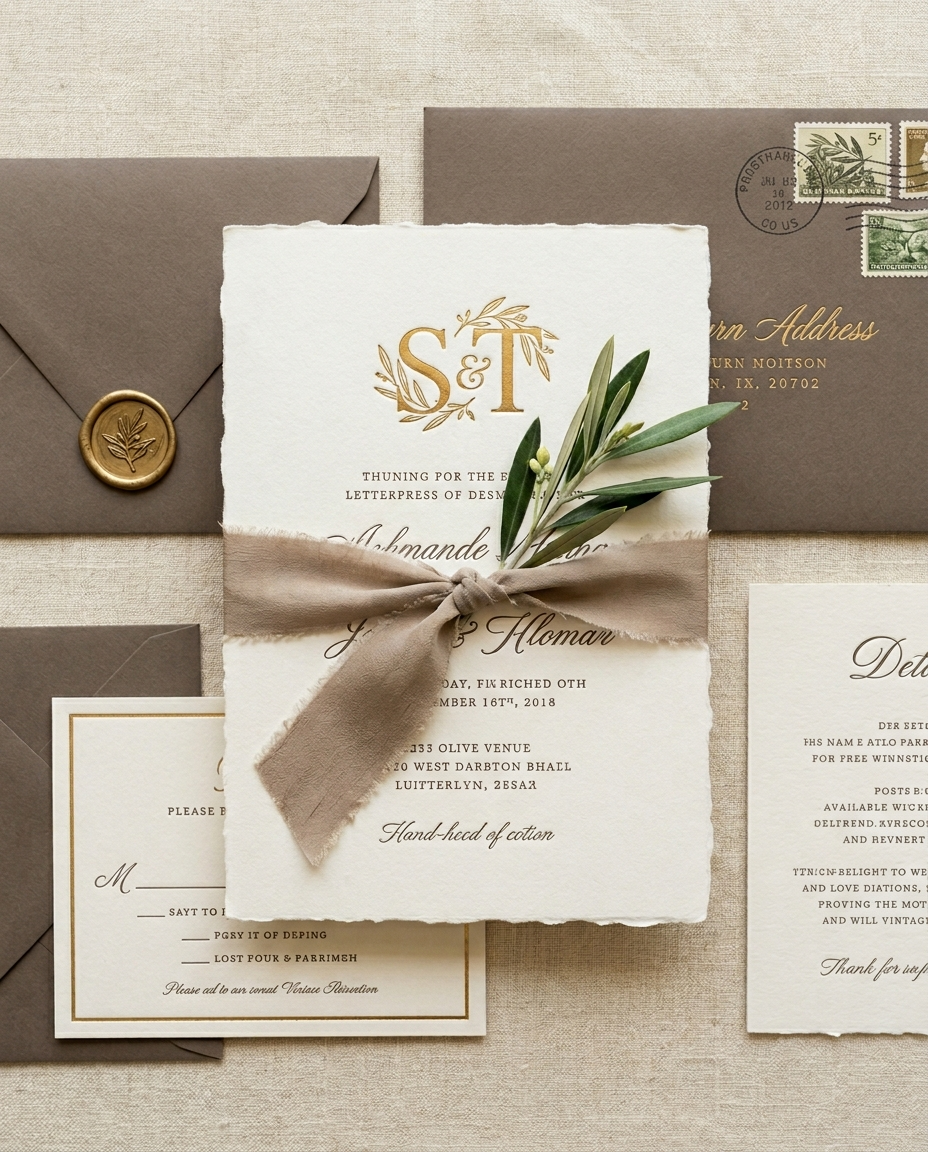
Letterpress is the printing method most people picture when they think of luxury invitations. The press physically embosses the ink into the paper, which creates a soft tactile feel and a slight indent on every letter. It looks beautiful in person and photographs beautifully in flat-lay shots that get reused on Instagram all night.
Letterpress runs $8 to $20 per invite from studios like Bella Figura, Yonder Design, and Smitten on Paper. The premium is real because the press cannot run more than one color at a time, so a two-color invitation needs two passes. Foil-pressed invitations cost similar amounts and are the right choice if you want metallic accents like gold or rose gold that letterpress cannot reproduce.
"Most invitations get reordered because of a proof oversight, not a design change. Read the proof out loud, in full, to a friend who has never seen it."
Modern minimal wedding invitation suites
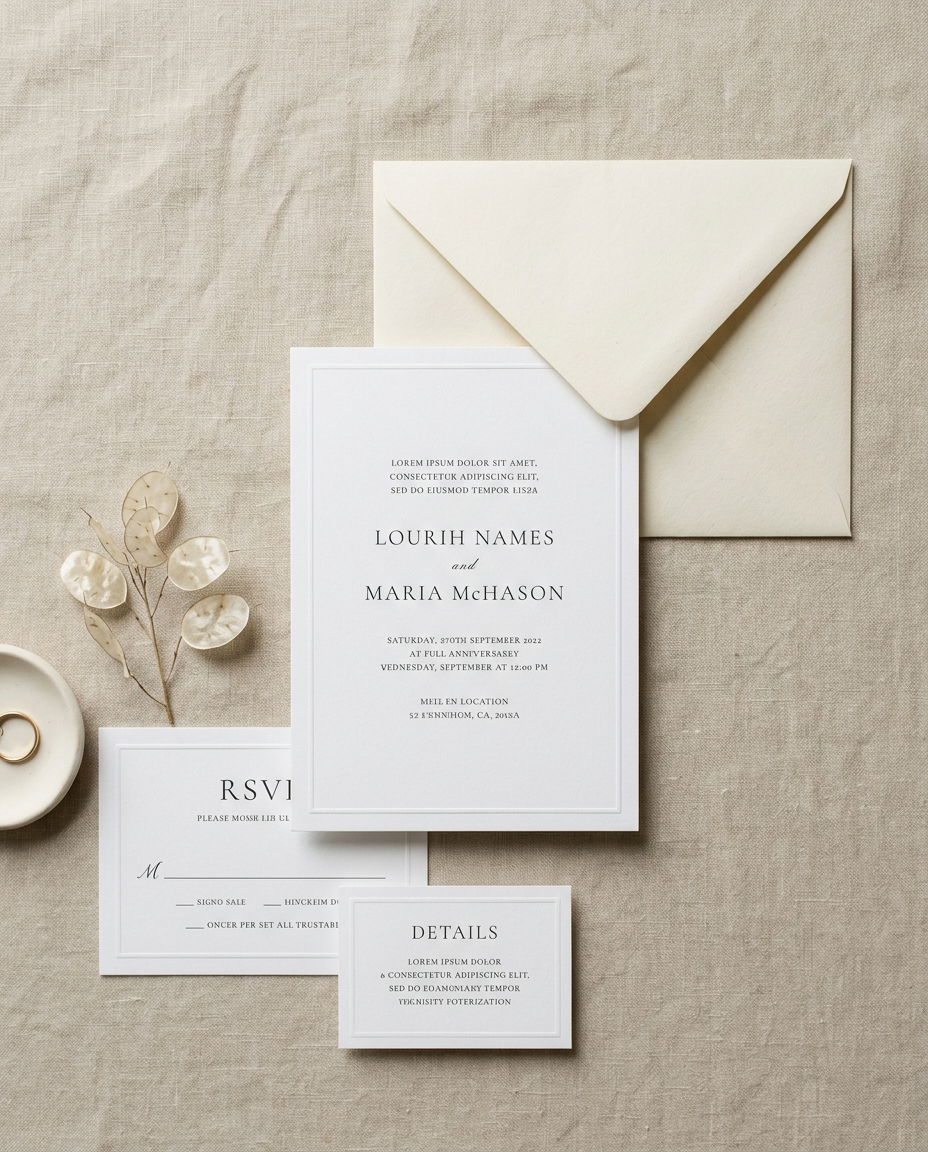
Modern minimal invitations are the format I have seen most on 2026 mood boards from designers like Papier and Paperless Post. The look is matte white paper, thin sans-serif or modern serif type, a single accent color, and a clean folded suite. They photograph well, mail flat without surcharges, and cost about 40 percent less than letterpress.
The trade-off is that minimal invitations live and die by the typography. A poorly chosen font ruins a minimal suite in a way that ornament forgives. If you are designing your own through Canva or a stationery template, pay a professional designer $150 to $300 to review the file before you print. It is the single best money you will spend on stationery.
Cultural pattern and heritage wedding invitations
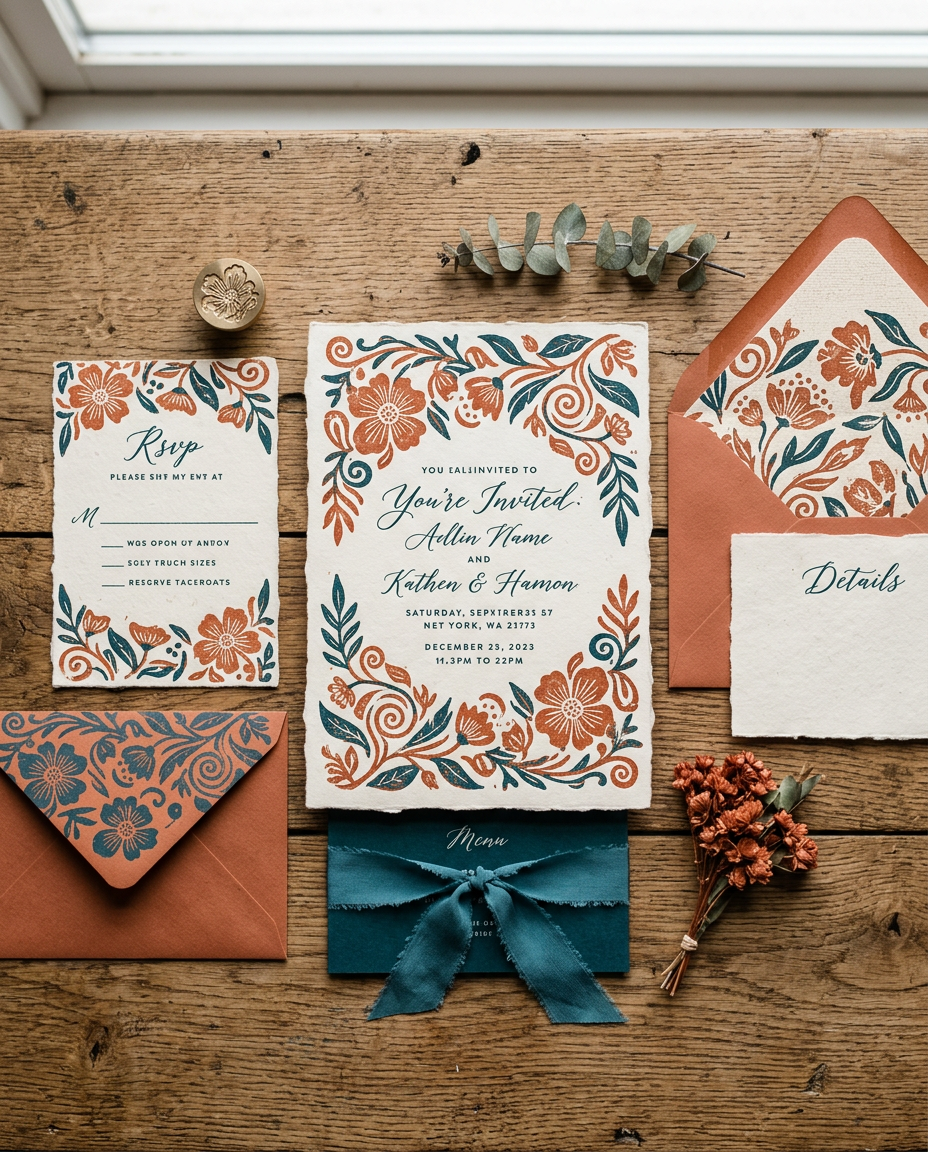
Cultural invitations have moved from family-printed afterthought to a primary design choice, and South Asian, West African, Mexican, and East Asian stationers are leading the work I have seen on Pinterest in the last year. Block-print florals, paisley borders, and hand-painted motifs are doing what generic eucalyptus drawings did five years ago.
If your wedding incorporates multiple cultures, ask the stationer for a suite that lets each tradition have its own card rather than trying to layer them into one. The list below is what most multicultural couples I have looked at end up choosing.
- A primary invitation in the language and style of the family hosting the ceremony
- A bilingual or translated insert for guests outside that tradition
- A separate ceremony details card describing what to expect for guests unfamiliar with the customs
- A reception card in a coordinating but distinct style that signals the shift in tone
- Optional dress code guidance, especially for traditions like sangeet, mehndi, or tea ceremonies where guest attire is unfamiliar to outsiders
Acrylic and vellum wedding invitations for modern weddings
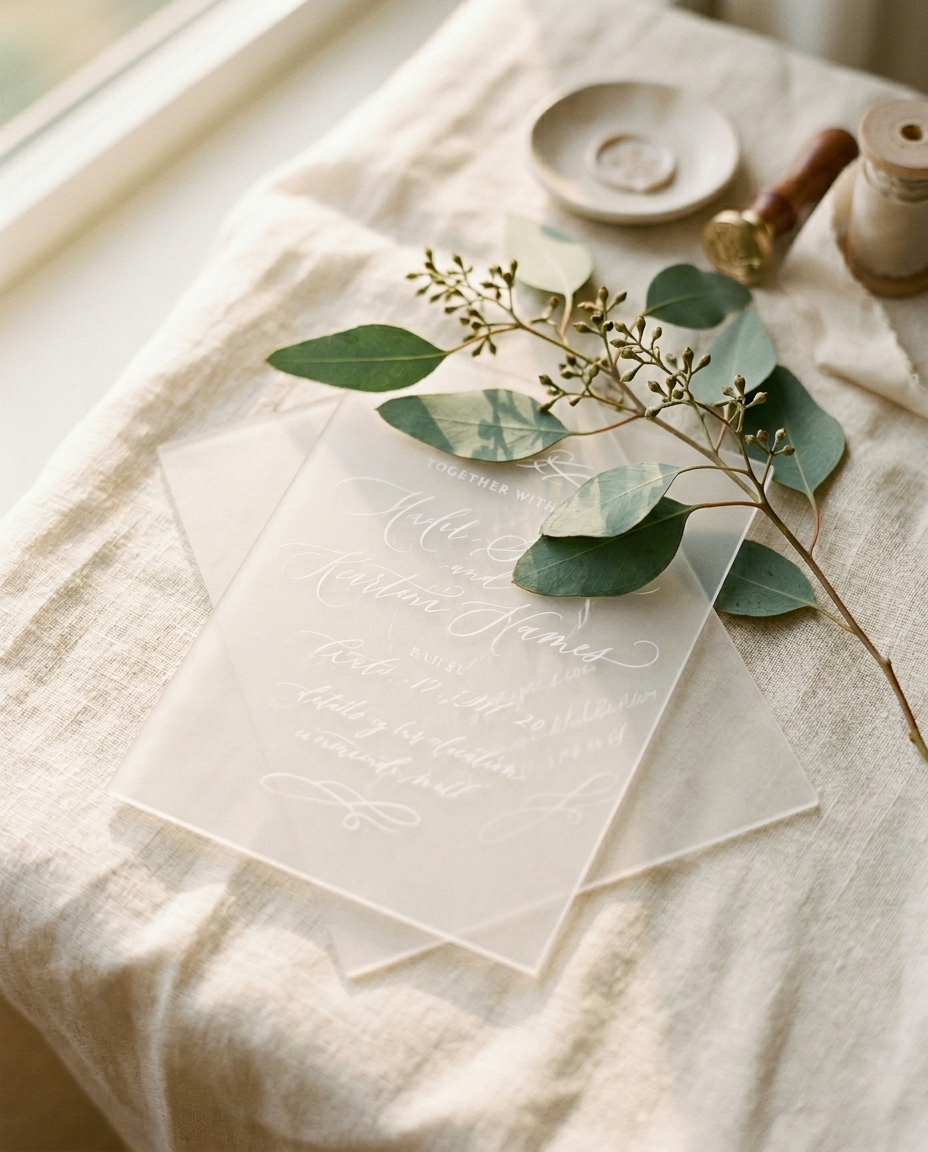
Acrylic invitations had a moment in 2022, then died down, and have come back in the last 18 months in a quieter format. Frosted or smoked acrylic with white ink is the version that has aged best. Clear acrylic with black ink reads as 2022 in a way nobody loves anymore.
Acrylic invites are non-standard mailers and almost always need to be hand-delivered or sent in a rigid mailer with extra postage. For a small wedding or a local guest list, they are a beautiful keepsake. For a large guest list across the country, the postage and breakage rate are not worth the look.
Save-the-date ideas that double as keepsakes
Save-the-dates have quietly become as elaborate as invitations themselves. The format I have seen most in the last year is a magnetic save-the-date with the couple's portrait, which costs about $2 to $4 per piece and gets stuck on guest refrigerators for the next 8 months.
If you want a save-the-date your guests actually keep, skip the cardstock and go with a magnet, a small art print, or a beautifully designed digital save-the-date through Paperless Post that doubles as a website link. Digital is no longer the budget option. It is the design-forward choice.
The 8-week wedding invitation timeline that prevents panic
Wedding invitations mail 8 to 10 weeks before the wedding, which means you order them 12 to 14 weeks out. Backing up from there: design proof at 14 weeks, final approval at 12 weeks, print at 11 weeks, assembly at 10 weeks, mail at 8 weeks. Anything tighter than that and you are paying rush fees.
Save-the-dates go out 6 to 8 months before the wedding, or 8 to 10 months if you have many out-of-town guests. RSVP deadline lands 4 weeks before the wedding so caterers can finalize counts. Build the timeline backward from the RSVP deadline rather than forward from today.
FAQ
Frequently asked
How much should I budget for wedding invitations?
Most couples in the US spend between 3 and 5 percent of their total wedding budget on stationery. On a $30,000 wedding that is $900 to $1,500. The number rises quickly with letterpress, foil, custom illustration, and oversized formats. Digital save-the-dates and minimal printed invitations stay closer to 2 percent.
When should I send my wedding invitations?
Mail invitations 8 to 10 weeks before the wedding for domestic guests, and 10 to 12 weeks for destination weddings or international guests. RSVP deadlines land 3 to 4 weeks before the wedding so the caterer can finalize counts. Save-the-dates go out 6 to 8 months before.
Do I need to send paper invitations or can I do digital?
Digital invitations through services like Paperless Post or Greenvelope are a real option in 2026 and are accepted across most age groups. Paper still feels more formal for traditional weddings, especially when older relatives are involved. A hybrid approach (paper save-the-dates, digital invitations) is increasingly common and cuts the stationery budget in half.