Seasonal Roundup
23 Winter Wedding Ideas That Embrace the Cold
Candlelit dinners, velvet capes, mulled wine welcome drinks. Winter weddings stopped being a compromise sometime around 2023.
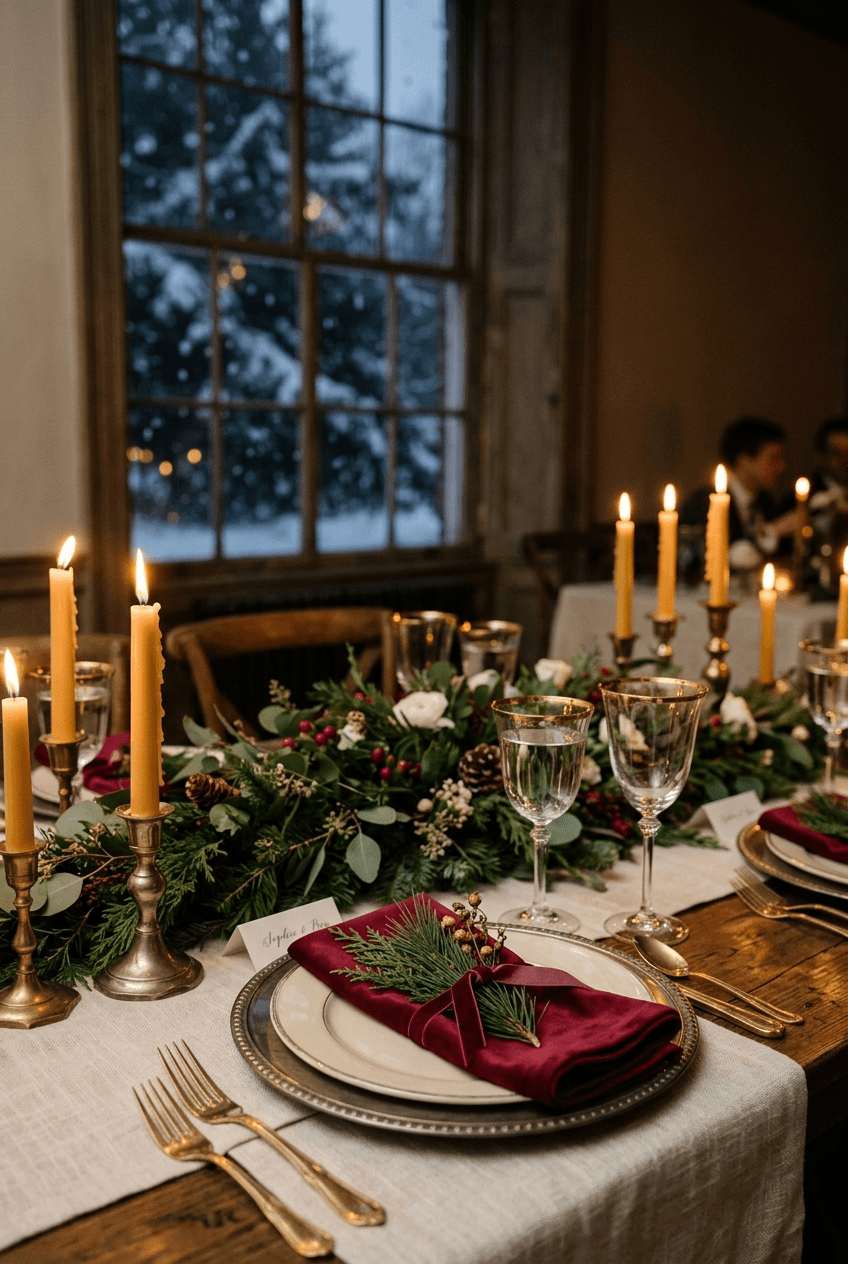
Winter weddings stopped being a compromise sometime around 2023. Couples used to choose December because they couldn't get a Saturday in October, and now they choose December because they want it. The aesthetic that emerged is candlelit, velvet-heavy, photogenic, and surprisingly underbooked through January.
Why winter weddings are having a quiet renaissance
The numbers are doing the talking. November through February has been the fastest-growing wedding season in the U.S. since 2022, and most major venues now offer 20 to 40 percent off-peak pricing for these months. Vendors are more available. Photographers are more flexible. The booking timeline is half what summer requires. For couples paying their own way, the math is loud.
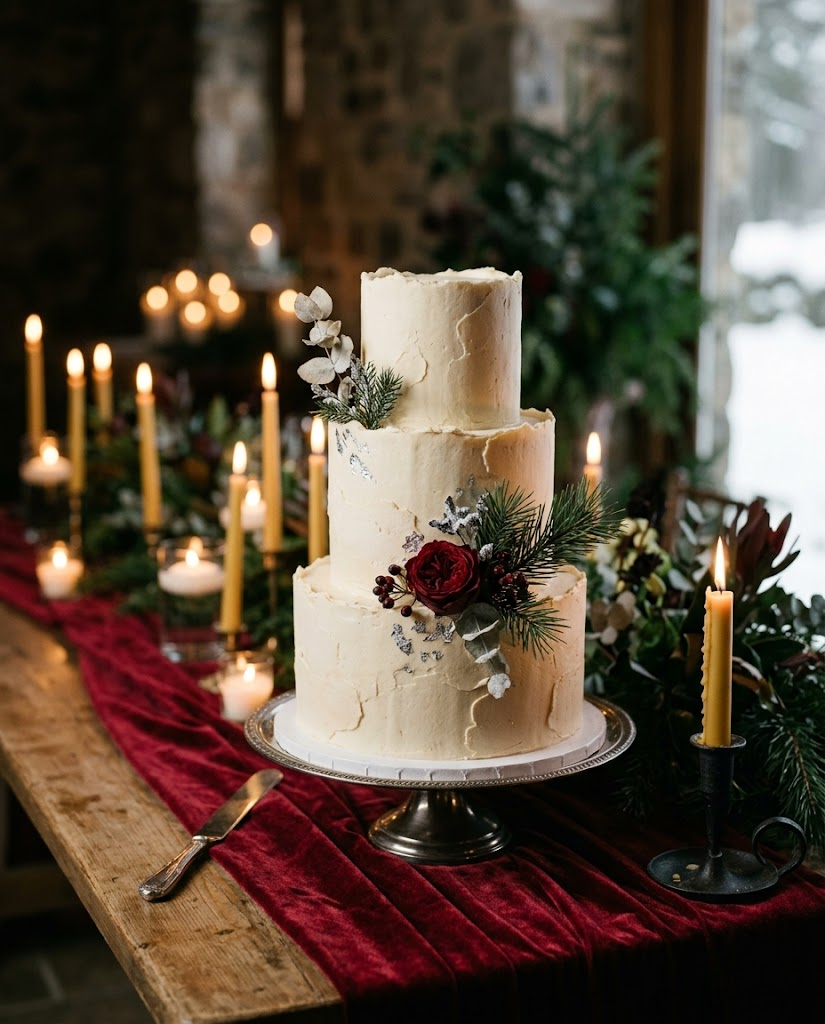
The aesthetic side caught up. Winter weddings used to mean either Christmas-themed or pulled-back-summer-themed. The 2026 winter wedding has its own visual identity: deep candlelight as primary lighting, velvet and faux-fur textures, evergreen and dried winter florals, jewel tones in attire, and warm welcome drinks at every reception. None of it apologizes for being indoors in January.
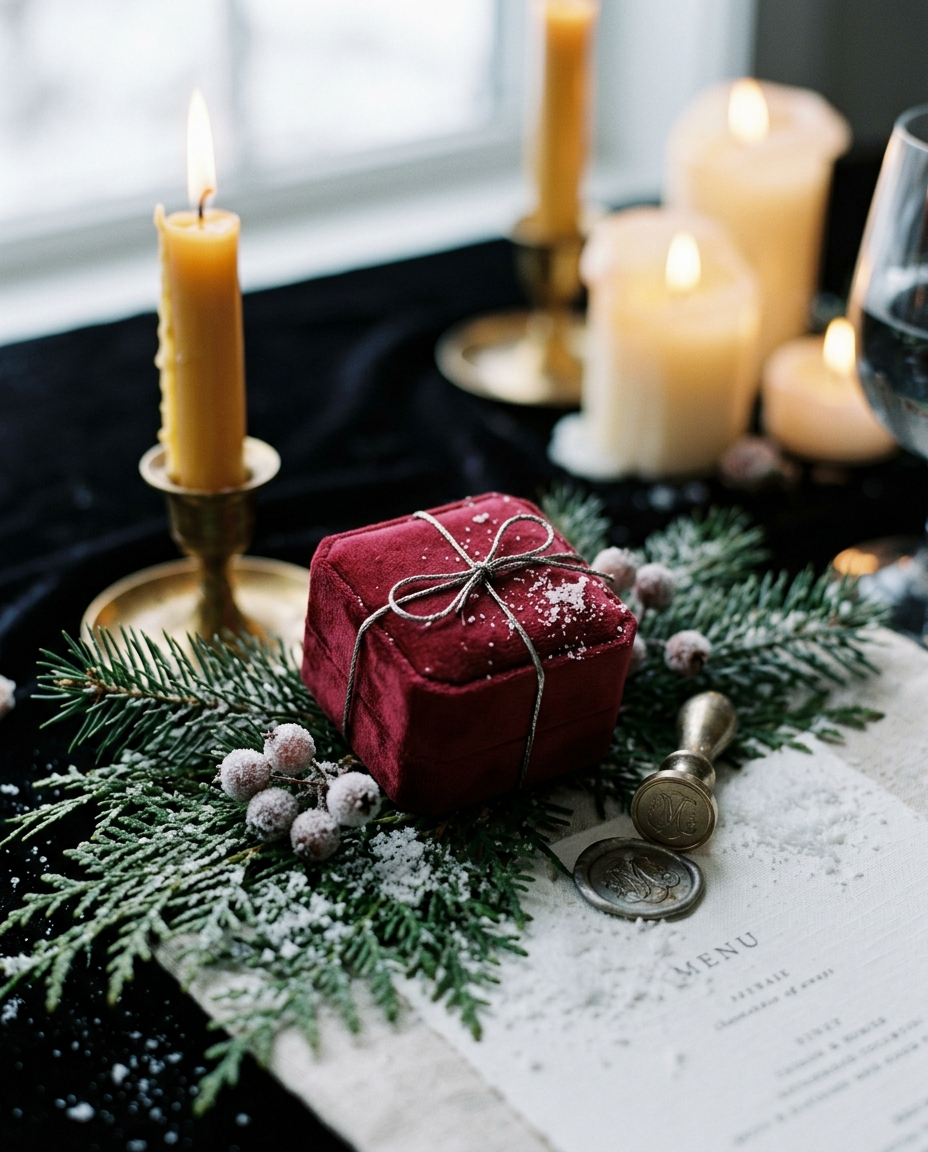
The winter aesthetic at scale
What separates a great winter wedding from one that just feels like a summer wedding moved indoors: commitment to the season's actual textures. Velvet runners instead of linen. Faux-fur throws on cocktail seating. Evergreen garlands instead of light florals. Mulled wine and hot toddies at the welcome instead of ice water. The space should feel like the weather, not in opposition to it.
Palette-wise, winter is the most permissive season. Deep emerald, oxblood, navy, plum, ink, and chocolate all hold their weight. The most-photographed winter weddings of 2025 used cherry red as accent on cream-and-evergreen palettes, or deep jewel tones layered onto cream linen. White-on-white winter weddings work too but require obsessive lighting attention to avoid feeling cold.
- Cream + evergreen + cherry red: the editorial winter default
- Ink + brass + ivory: modern winter, photographs strongest at evening
- Plum + cream + dried wheat: rich, warm, perfect for late January
- Navy + cream + amber glass: preppy-leaning, holds up across seasons
- Cream + chocolate + sage: unexpected for winter, reads expensive
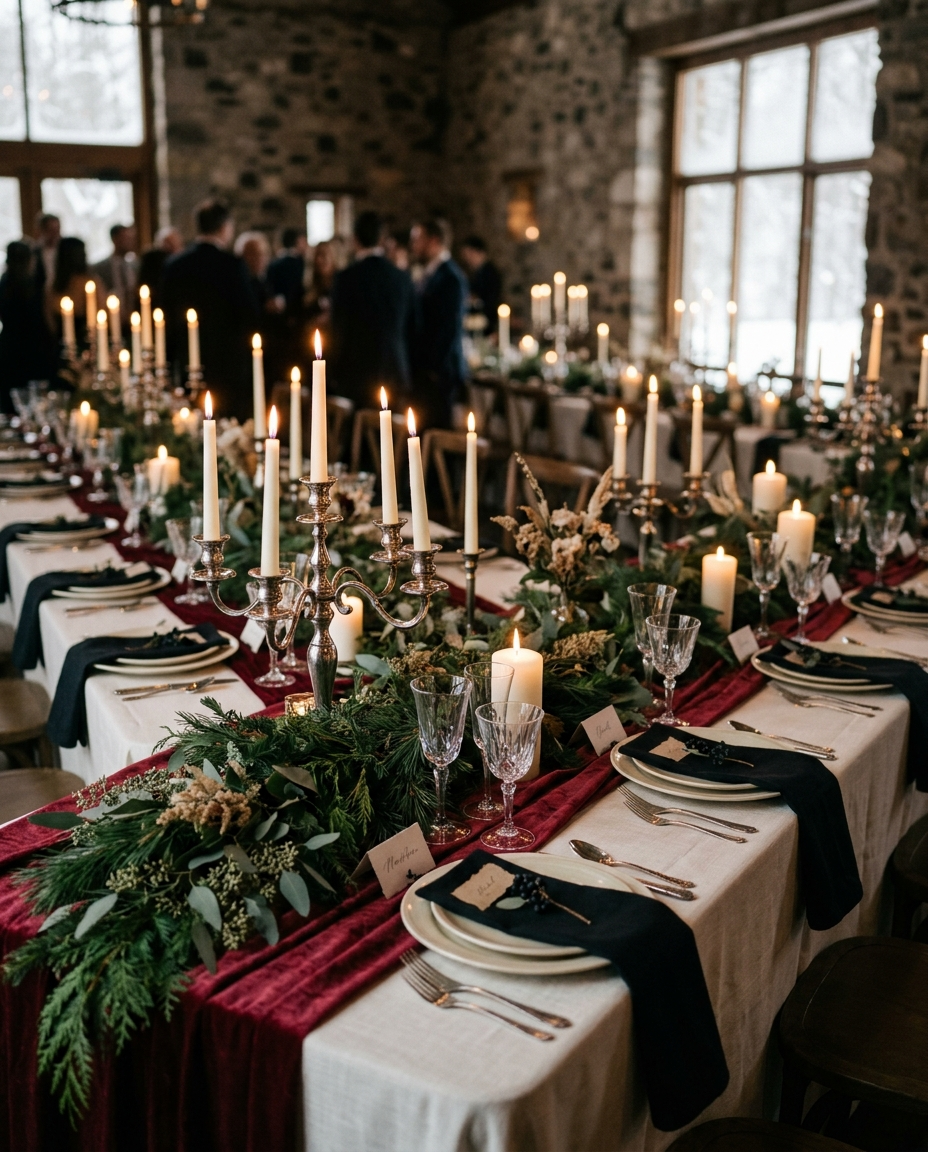
"The space should feel like the weather, not in opposition to it. Winter weddings stopped apologizing for being indoors and started making it the point."
Florals when most flowers aren't in season
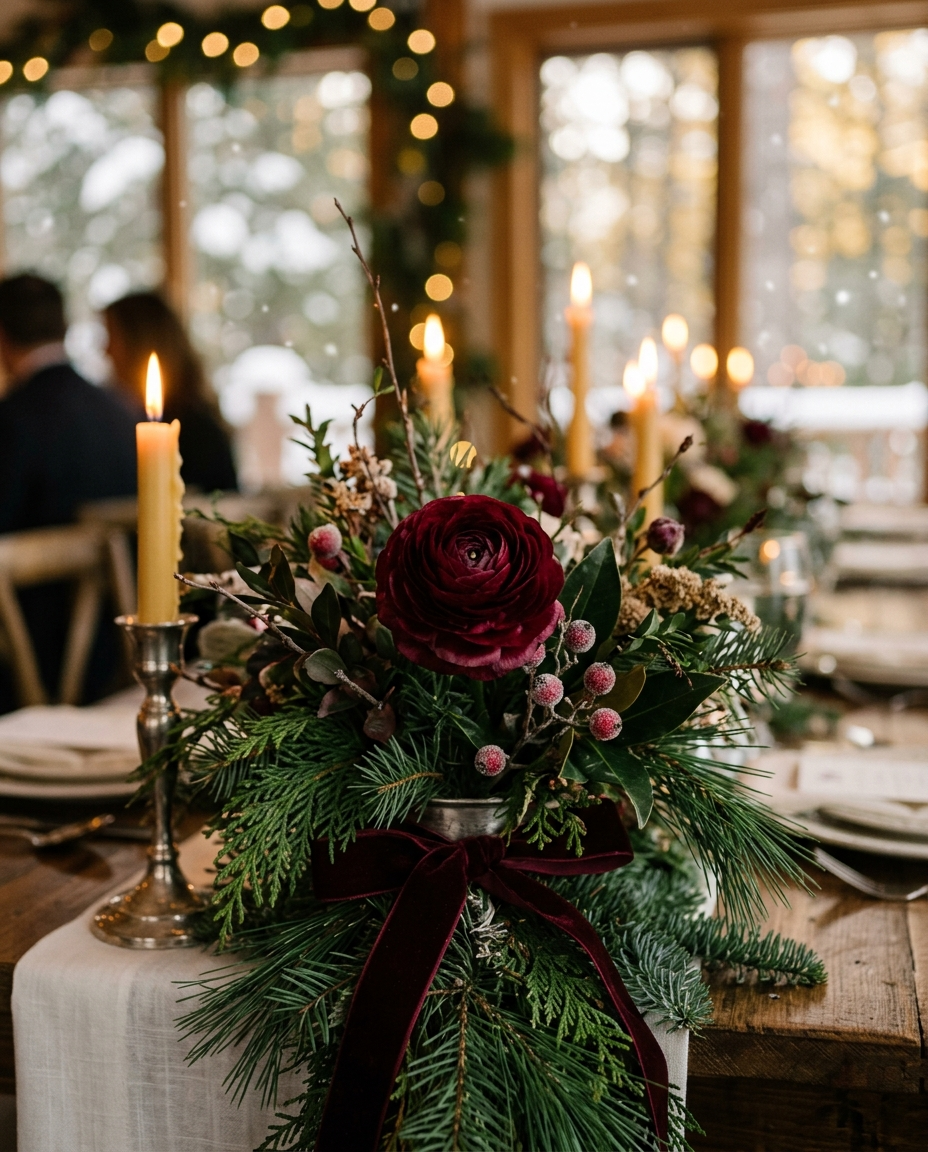
Winter florals are the most-misunderstood category in wedding planning. Most florists will quietly substitute imports (peonies in December cost three times what they cost in May) and most couples don't realize until the bill arrives. The fix is to lean into what's actually growing or storing well: evergreen, hellebores, ranunculus, anemones, dried wheat, dried strawflower, sometimes amaryllis for the dramatic statement.
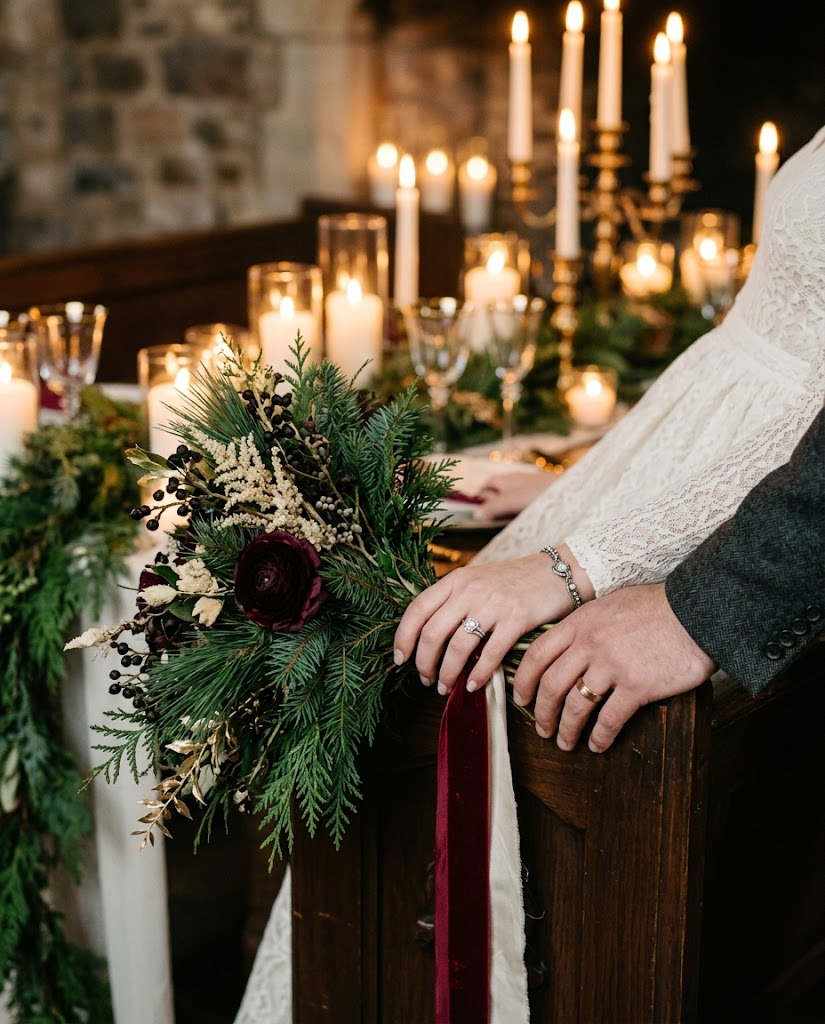
The bouquet pattern that works in winter: smaller, denser, with more visible greenery and dried element than summer bouquets. The wrapping shifts to velvet ribbon (silk crepe doesn't read seasonally appropriate). Centerpieces lean low and dense rather than tall and airy, with taper candles doing the structural work that tall blooms would do in other seasons.
The table when it's freezing outside
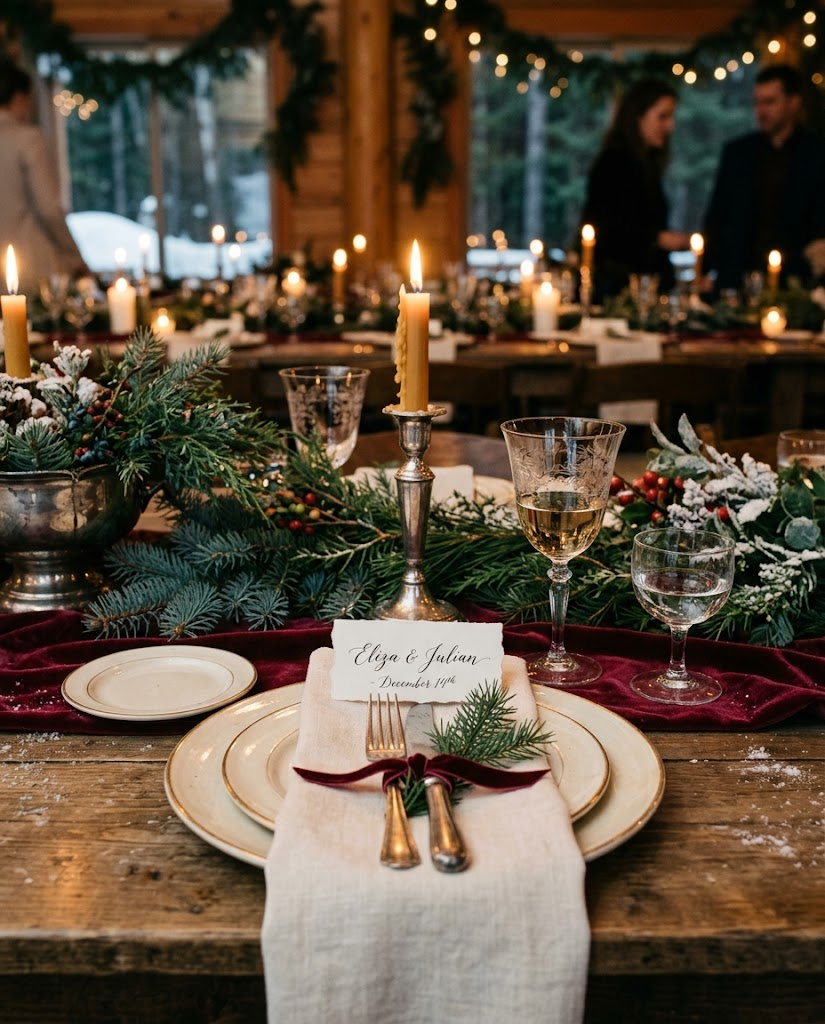
Winter tables work hardest when they layer texture: velvet runner over cream linen, deep velvet napkins, amber glassware (not clear), brass or matte-black flatware, and four to six taper candles per six-foot section. The candle density matters more than people think. A dimly-lit reception with insufficient candlelight reads cold and clinical. Good winter receptions have visible flames at every place setting.
What goes on the menu cards: hot welcome drinks (hot toddies, mulled cider, mulled wine), heavier appetizers, soup courses (winter weddings can do soup in a way other seasons can't), red wine over white. The menu should feel like the season; a summer-style cocktail menu at a January wedding undoes most of the work the rest of the design is doing.
Stationery and signage for winter
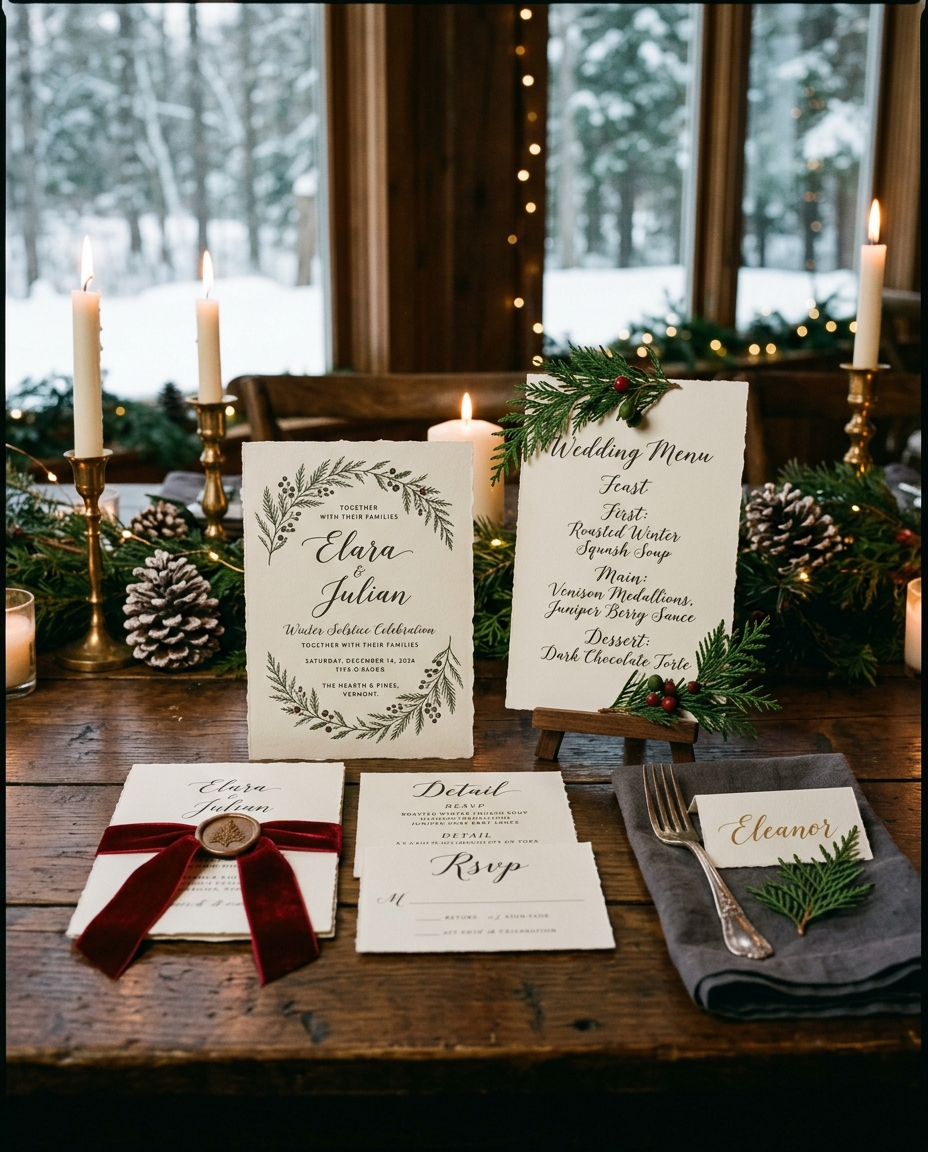
Winter stationery has the most permission to use deep, saturated colors. Cream cardstock with deep cherry foil-stamped lettering. Ink-colored envelope with bone wax seal. Forest green save-the-dates with brass foil. The materials that fight winter: anything pastel, watercolor washes, baby's breath illustrations. The materials that work: heavyweight cotton paper, foil stamping, hand-lettering in deep ink.
For day-of signage, winter benefits from oversized, dramatic statement pieces. A six-foot welcome sign in deep color, a full-wall seating chart with hand-lettered evergreen accents. The space is darker (windows go gray earlier, indoor lighting is dim), so signage needs to be larger and more contrast-y than summer wedding signage to read at a distance.
The thing that makes winter weddings work: candlelight
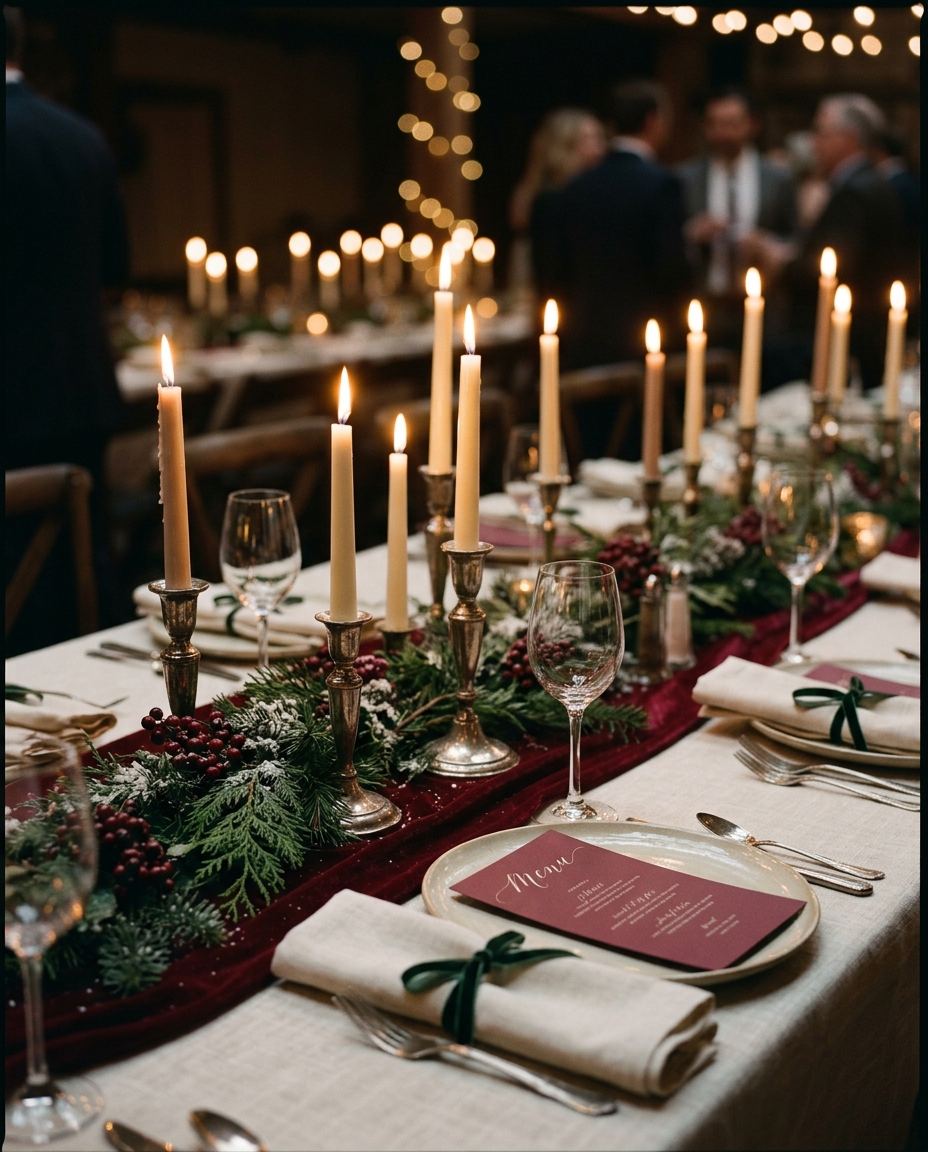
If you do nothing else right, get the candlelight right. Winter weddings live or die on the density and quality of candlelight. Real beeswax candles (they smell better and burn warmer) over paraffin. Taper candles (taller flame profile) over pillars. Cluster candles in groups of three to seven on every horizontal surface. Hurricane lamps for any cocktail or perimeter areas.
The single largest visible difference between a winter wedding that photographs well and one that doesn't is candle count. Most couples under-budget here. The right number for a 100-guest reception is 200 to 400 individual candles across the space. That feels excessive on the order form. It's exactly right in person.
Winter attire: velvet, capes, long sleeves
Winter is the most underrated season for bridal attire. Long-sleeve gowns finally make sense. Velvet finally makes sense. Capes (bridal capes are having a moment) finally make sense. The most-saved 2026 winter brides wore long-sleeve column gowns in silk crepe, structured velvet gowns, or slip dresses with a tailored cape thrown over for the ceremony.
Bridesmaids in winter shift toward jewel tones and heavier fabrics. Velvet bridesmaid dresses photograph rich and warm in candlelight in ways no summer chiffon does. Mismatched velvet (each bridesmaid in a different jewel-tone velvet, same silhouette) is the most-photographed bridesmaid look of the 2025 winter season. Grooms wear wool, tweed, sometimes velvet jackets, often in deep colors that summer suits avoid.
FAQ
Frequently asked
Will guests actually come to a winter wedding?
Yes, with two caveats. Avoid the week of Christmas (December 22 to 26) and the week of New Year's (December 30 to January 2). Otherwise, January through early March attendance is comparable to summer in our experience. Provide guidance on weather-appropriate attire and offer indoor cocktail spaces if any portion of the event is outdoors.
How much cheaper is a winter wedding really?
Off-peak vendor pricing typically runs 20 to 40 percent below summer-Saturday rates. Venues, catering, photography, and florists all price down. The categories that don't budge: dress alterations, marriage licenses, a few in-demand specialty vendors. Total budget for the same wedding done in February vs June often runs 20 to 30 percent lower.
What if it snows on the wedding day?
Most winter weddings book venues that don't depend on outdoor space, so weather rarely cancels them. The bigger question is travel: discuss snow contingency with out-of-town guests when sending invitations. A winter wedding rarely cancels, but transportation absolutely can. Build buffer into your day-of timeline for guest arrival delays.
You might also love
More in By Season
Palette Lookbook · 6 min
18 Fall Wedding Palettes That Aren't Burgundy and Burnt Orange
The season has more range than you think.