Palette Lookbook
18 Fall Wedding Palettes That Aren't Burgundy and Burnt Orange
The season has more range than you think.
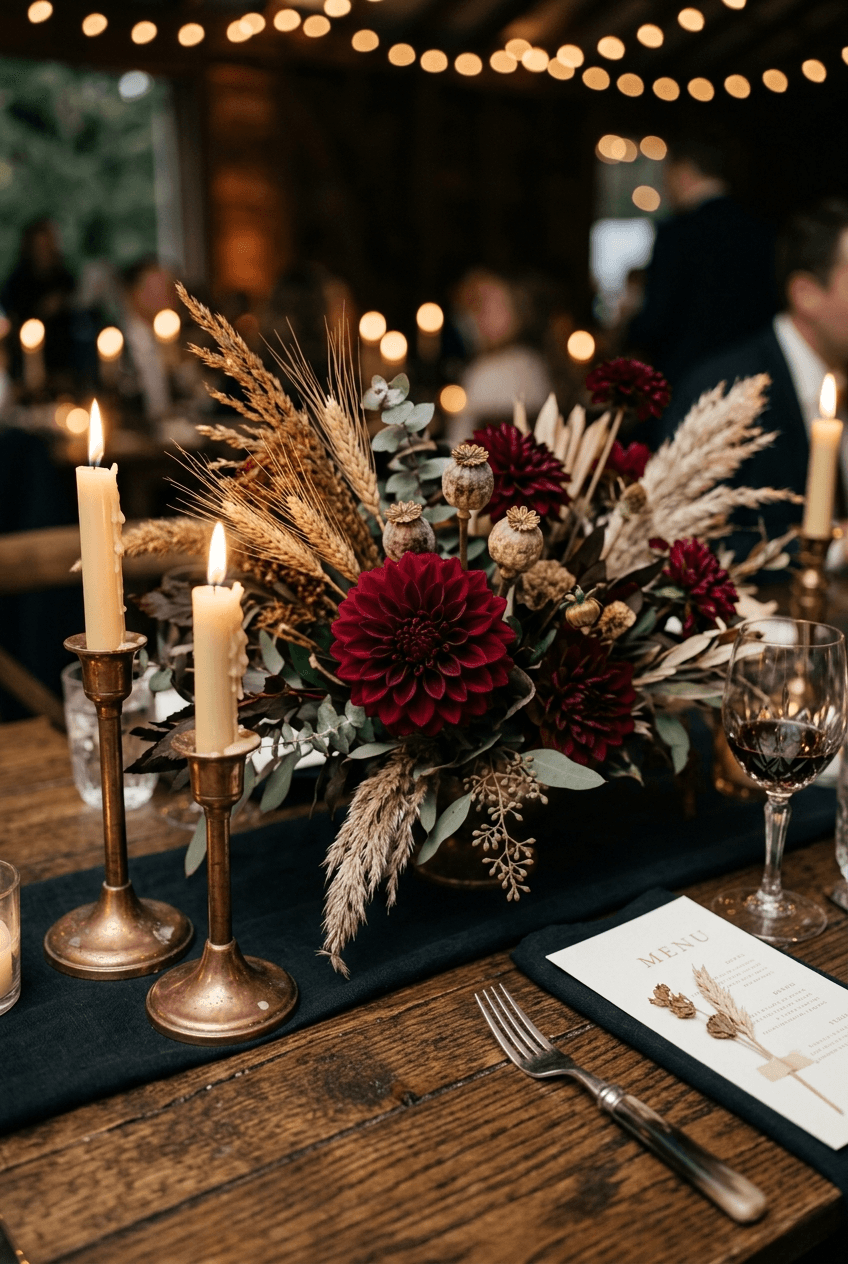
Burgundy and burnt orange ran the fall wedding playbook for ten years and have officially run out of road. Couples saving fall palettes in 2026 are after deeper, weirder, and more specific. The good news: the season has more range than the wedding industry has been selling.
What's tired about default fall palettes
The standard fall wedding palette of the late 2010s (burgundy, burnt orange, dusty rose, gold) was so widely executed that it's become its own visual cliché. We can spot a 2017-vintage fall wedding from a single tablescape photograph. The dahlias are amber, the napkins are burgundy, the place cards are kraft paper, and the candles are gold. Every season sees a few couples discover this combination and rebuild it ten years later, photographing exactly the way it did the first time.
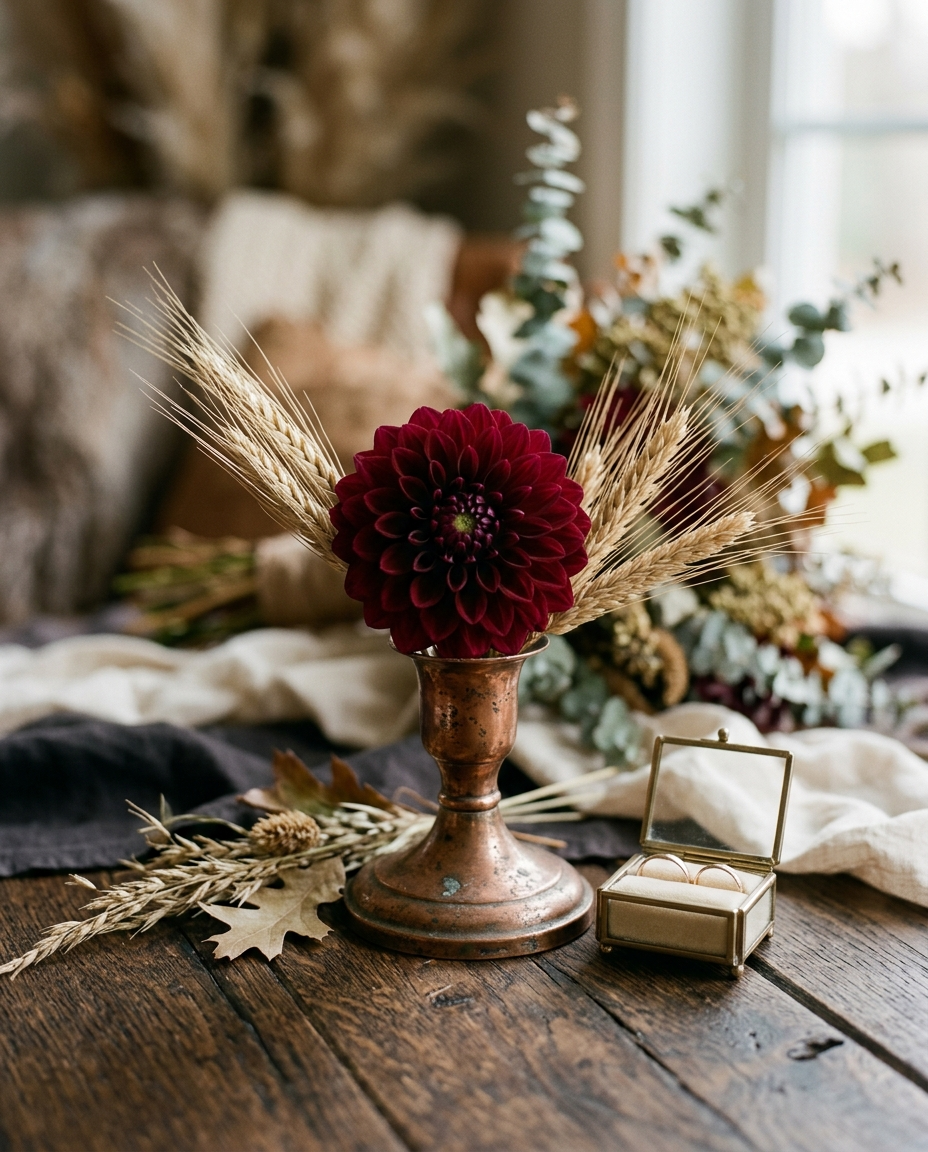
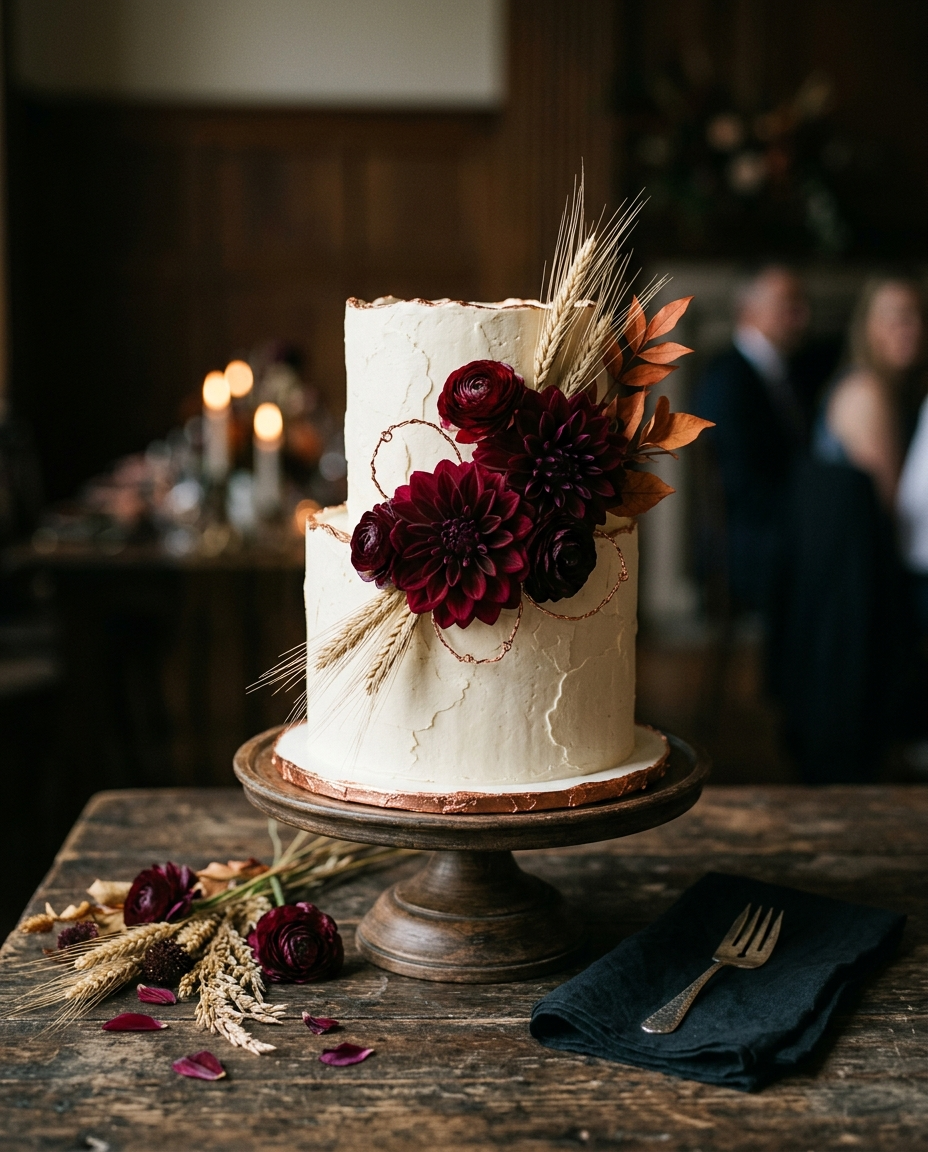
The 2026 fall palette move is to keep one of those colors and replace the others with deeper, less obvious choices. Pair burnt orange with deep forest green and ivory. Pair burgundy with dried wheat and ink. Pair dusty rose with chocolate brown and brushed brass. The point isn't to abandon fall colors. It's to stop doing all four at once.
Five fall palettes that don't look like 2017
We've featured these combinations across recent fall weddings and they consistently photograph stronger than the burgundy-and-orange default. Each leans on a single saturated anchor color, balanced with two neutrals and one structural counterpoint.
- Deep cherry + cream + antique silver: see our cherry palette piece for execution
- Forest green + rust + cream: woodsy without going country
- Plum + dried wheat + ink: moody, candlelit, perfect for late October
- Mustard + navy + ivory: preppy-leaning, works for sunny afternoon ceremonies
- Chocolate brown + sage + bone: the most unexpected, photographs as elevated and modern
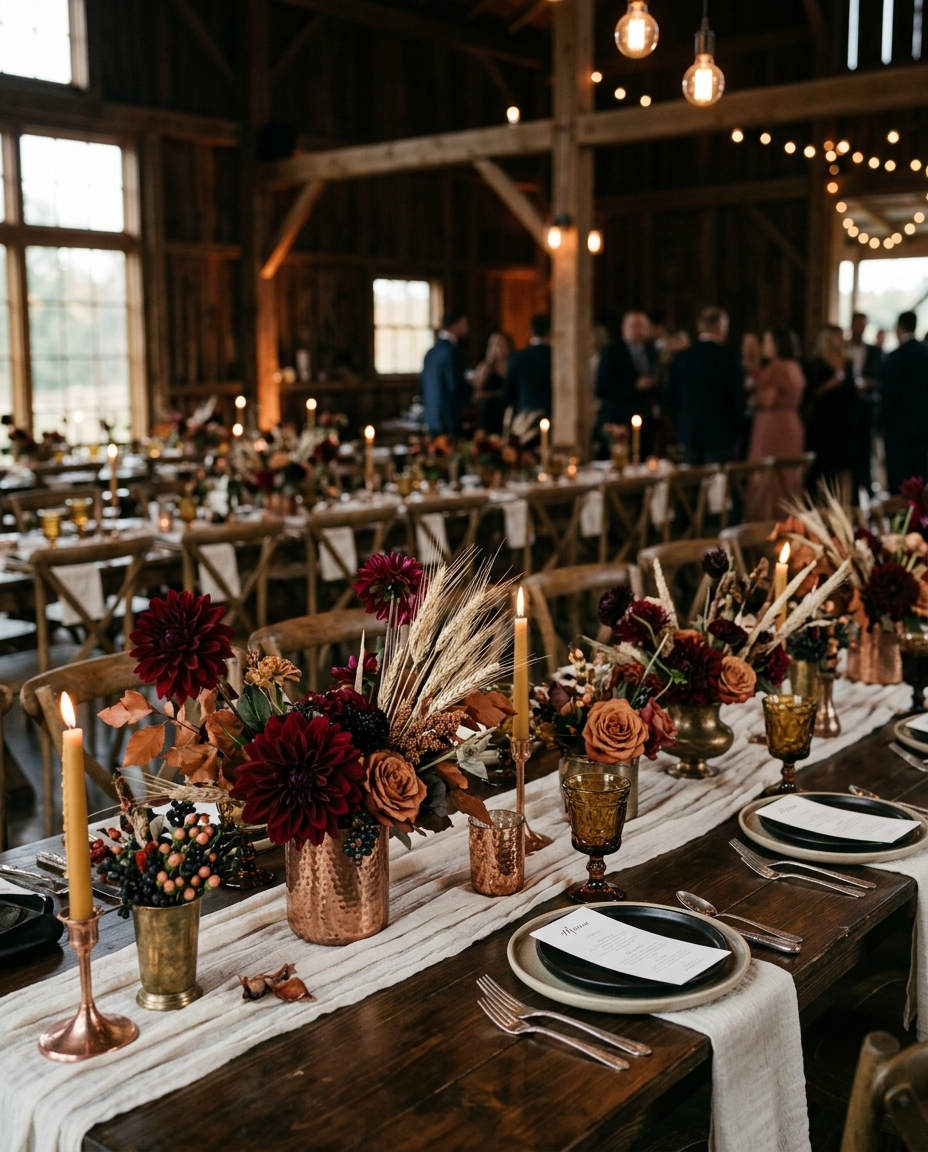
"The point isn't to abandon fall colors. It's to stop doing all four at once."
Florals that signal fall without signaling cliché
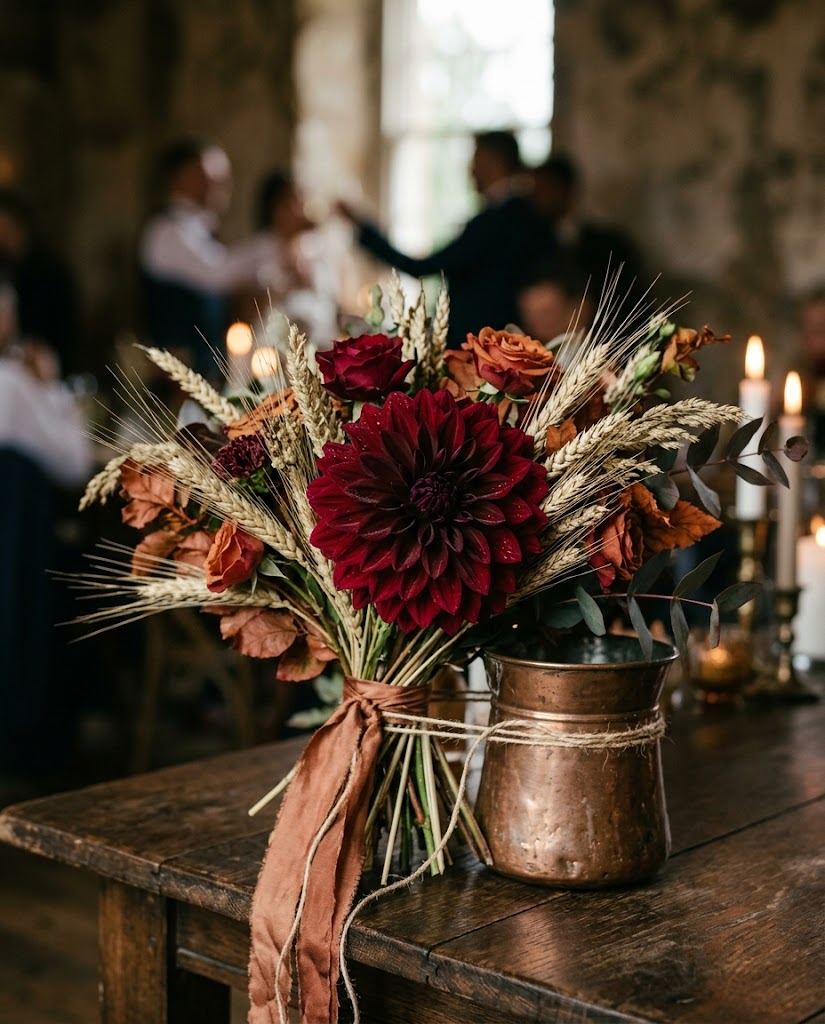
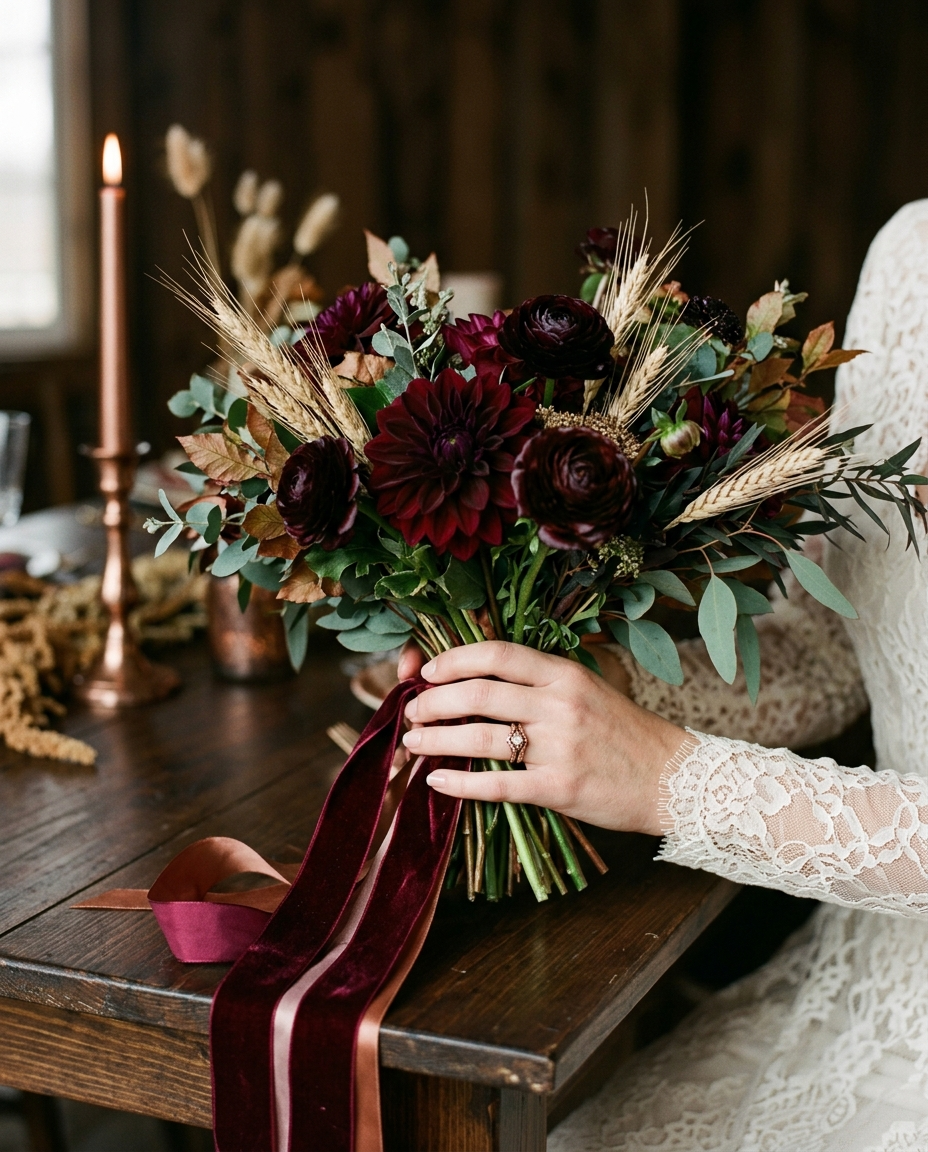
Dahlias do most of the heavy lifting in fall florals and there's no reason to abandon them. The shift is in what you pair them with. The 2017 dahlia bouquet had baby's breath and eucalyptus filler. The 2026 dahlia bouquet has dried wheat, dried statice, dried bunny tails, copper foliage, and one or two chocolate cosmos for the dark element.
Dried elements have stopped reading as 'pampas trend' and started reading as fall-appropriate texture. Use them at 30 to 40 percent of your floral mass: enough to add dimension, not enough to look like you panicked at the florist's dried-flower bin.
The table when the leaves are turning
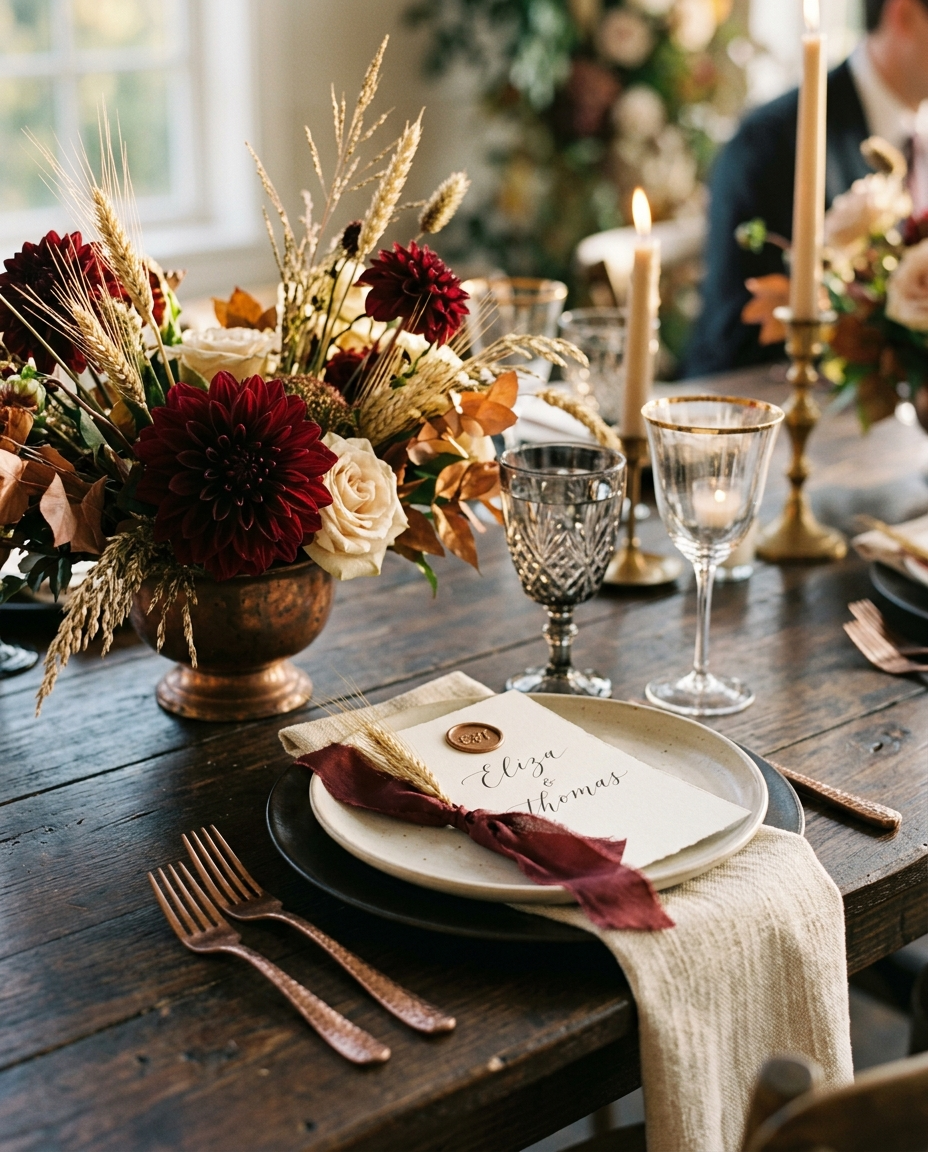
Fall tablescapes work best when one element holds the seasonal saturation and the rest stays restrained. A burnt-orange runner with cream linen base and deep burgundy florals fights itself. A cream linen base with cream florals and a single rust velvet napkin per place setting reads cohesive and intentional.
Skip pumpkins on the table unless you're throwing a deliberately Halloween-leaning wedding. Mini pumpkins photograph as twee. If you want a fall vegetable moment, use whole pomegranates split open or quince still on the branch. Both add color and texture without leaning hard into seasonal cliché.
Stationery, signage, and paper
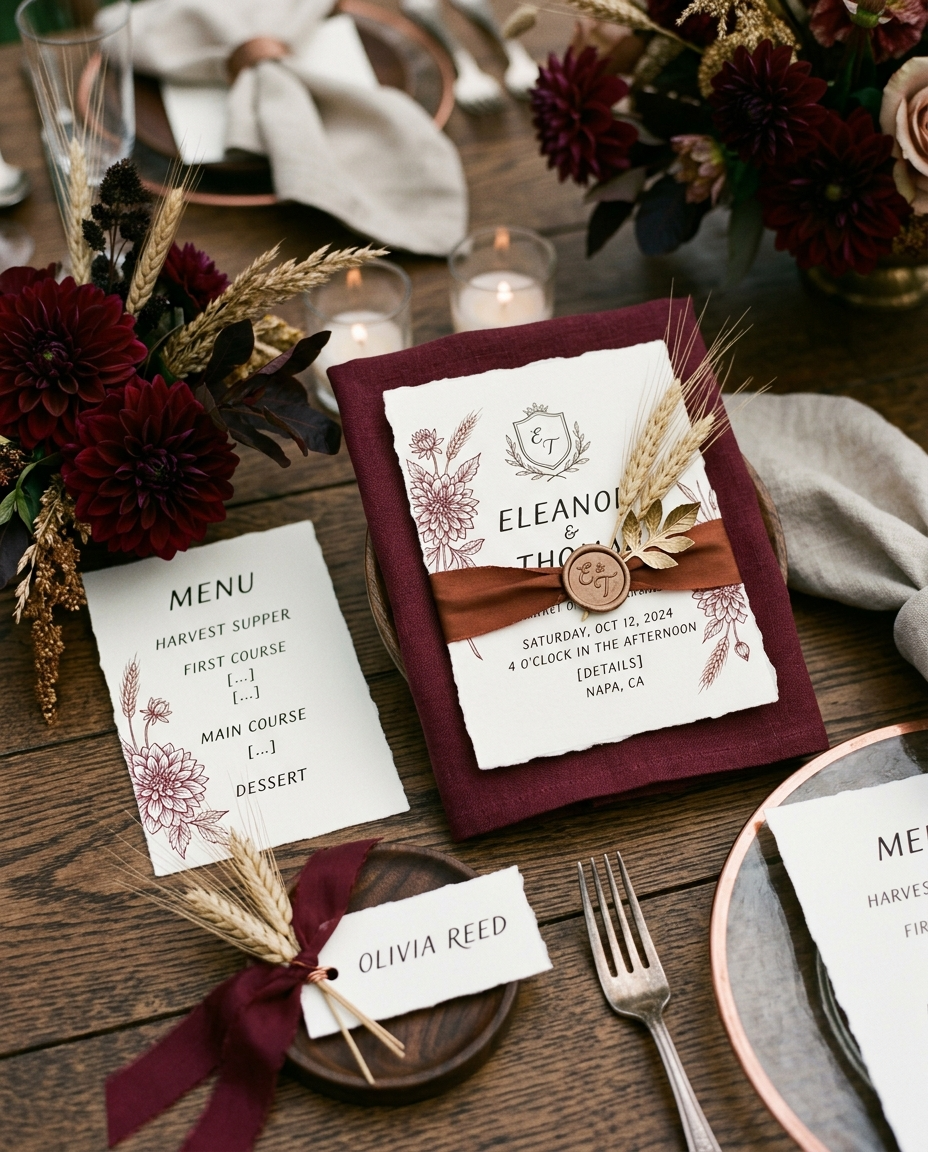
Fall stationery is the easiest place to over-commit to the season and date the wedding. The cleanest 2026 approach: cream or off-white cardstock as the base, deep ink lettering (charcoal, plum, or chocolate), and one accent color on the stationery suite. A single rust monogram, a forest green border, an amber wax seal. One color move per piece, not three.
For day-of signage, fall is also a great time to use natural elements as the substrate. Hand-lettering on a slab of weathered wood, ink on cotton paper with pressed leaves, vintage book pages mounted into a seating chart. These work in fall in a way they don't in spring or summer.
Light shifts faster in fall (and how to plan around it)
Sunset comes earlier and golden hour is shorter as fall progresses. A late September wedding can have an hour of golden light. A late October wedding might have 25 minutes. This affects ceremony timing more than any other planning decision in fall.
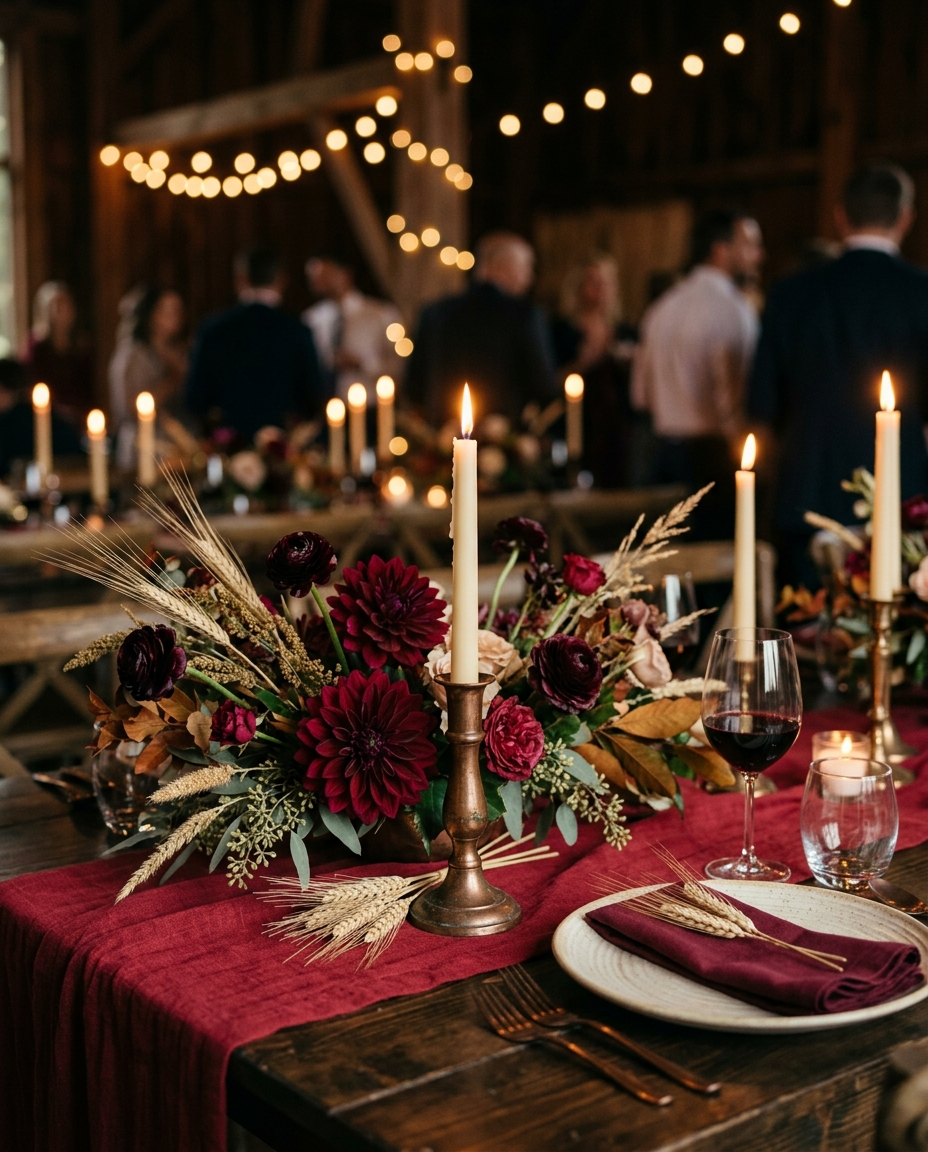
The pattern most strong fall weddings use: ceremony begins 75 to 90 minutes before sunset (not 60). That gives time for the recessional, group photos, and couple portraits before the light goes. Move to the reception space at sunset proper. The first dance lands around the time fall light has fully gone, and candlelight takes over.
What to wear when the weather is starting to turn
Fall is the most attire-flexible season. Slip dresses still work, structured ballgowns finally stop overheating their wearers, jewel tones land beautifully on bridesmaids. The undersold move for fall brides: a long-sleeve gown. Lace, silk, or even velvet sleeves photograph as warm and intentional in October light.
For grooms, fall opens the door to texture. Wool suits in chocolate, charcoal, or forest. Tweed jackets for less-formal weddings. Velvet jackets for evening receptions where the rest of the suit is more conservative. This is the season to wear the more interesting fabric.
FAQ
Frequently asked
Is burgundy and burnt orange officially over for weddings?
Not over, but oversaturated. If you genuinely love the combination, do it with restraint: pick one as the saturation anchor and pair it with cream and ink rather than the full 2017 quartet. The version that still photographs strong is editorial and quiet, not country-cliché.
Can I do a fall wedding without using any orange?
Easily. Plum-and-cream, forest-and-bone, and chocolate-brown-and-sage are all fully fall-appropriate without a single orange element. Fall is a feeling more than a color list. Dim candlelight, dried texture, and warm linens read as fall regardless of palette.
How early should I send save-the-dates for an October wedding?
Eight to nine months out for a fall wedding, since fall is now competitive booking season. Late September through mid-October is the most-booked stretch in most U.S. markets, and your guests' calendars fill up by July. Don't wait until summer.
You might also love
More in By Season
Seasonal Roundup · 7 min
23 Winter Wedding Ideas That Embrace the Cold
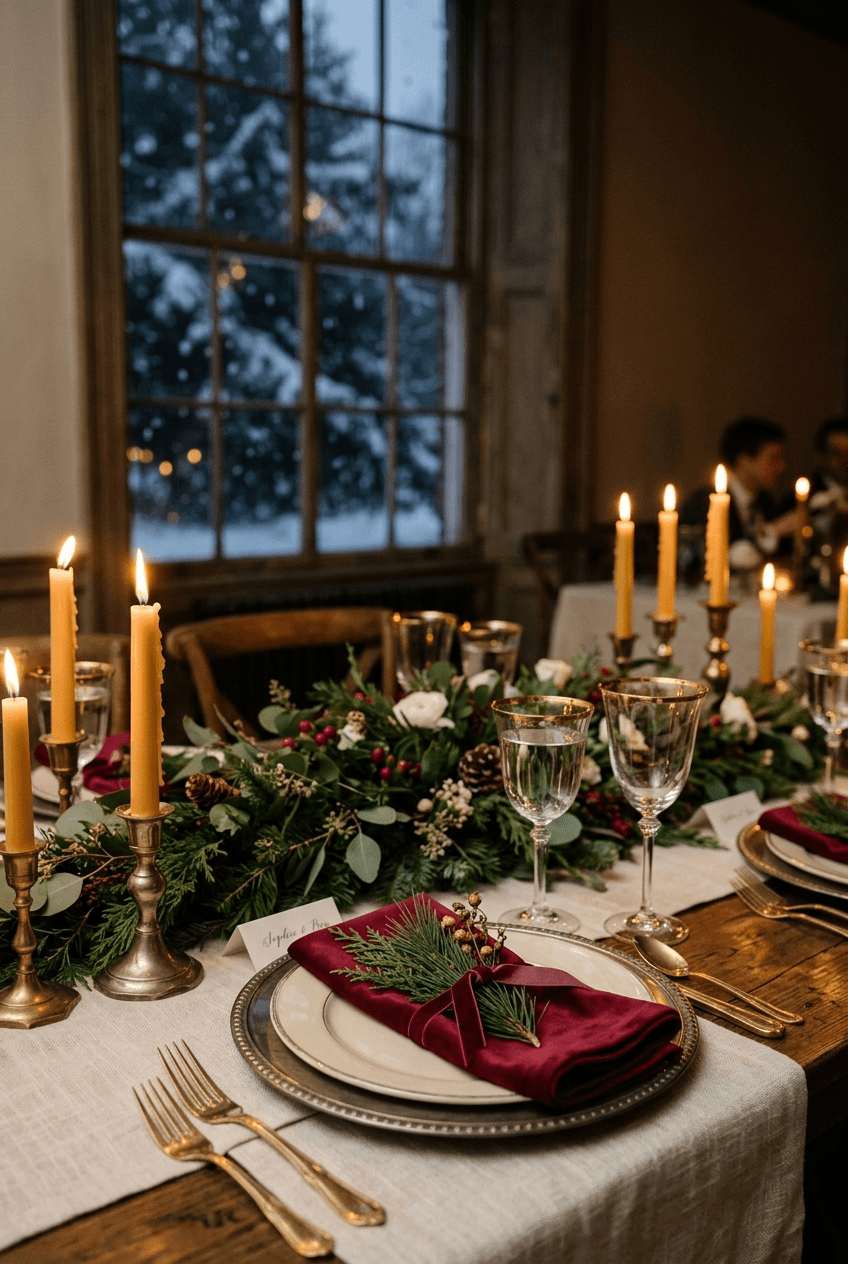
Candlelit dinners, velvet capes, mulled wine welcome drinks. Winter weddings stopped being a compromise sometime around 2023.